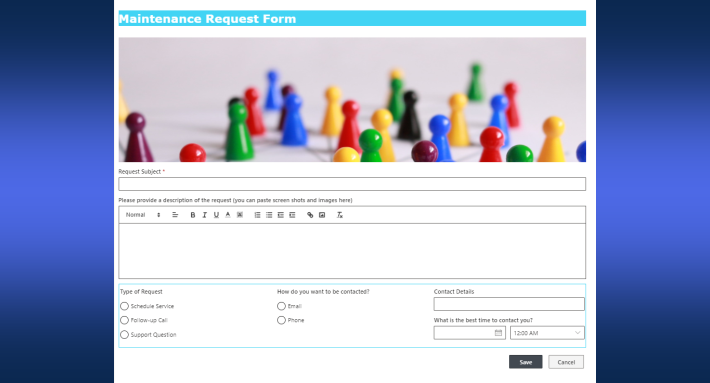
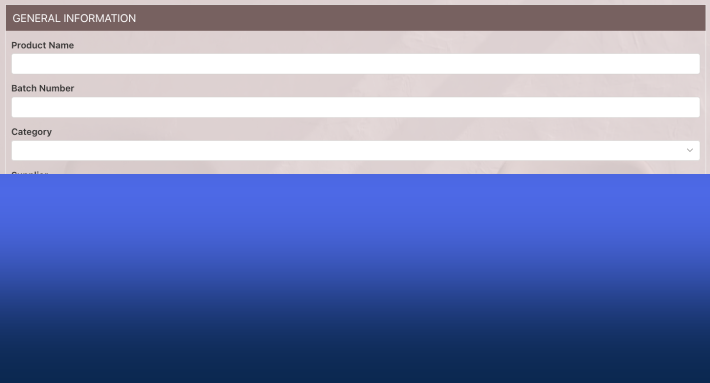
Your SharePoint lists already hold everything a report needs. The project milestones, the inspection results, the quarter's requests. What SharePoint cannot do on its own is present that data as a polished, branded document.
The Print component of Ultimate Forms closes that gap. You design a report template once. Every record then renders through it as a professional PDF or Word document, filled with live data, in one click.
This guide covers what makes a report different from a printout, how to build the template, and the report types most teams start with. For the whole output system around it, see the complete document generation guide.
A report is a printout with an audience
Any list can be printed. A report is something more deliberate. It has a reader: a client, an auditor, a leadership team. It has a shape: sections in a meaningful order, totals where the reader expects them, branding that says who stands behind the numbers. And it repeats: the same layout next week, next month, next project.
That audience is why the formatting lottery hurts. A status summary pasted into an email reads as effort. The same data in a branded, consistently formatted PDF reads as a system. Auditors, clients, and executives all respond to the difference, and they are exactly the people reports are for.
SharePoint's own options stop short of this. Views show data but do not present it. Exports produce spreadsheets, not documents. So teams improvise with copy-paste and screenshots, and every improvised report costs an hour and looks slightly different from the last one.
The template approach removes both problems at once. The hour is spent once, on the template. The look never varies again.
The template is an ordinary Word document
Building a report template does not require a designer or a developer. If you can make a Word document, you can make the template.
Lay out the report in Word. Your logo in the header. Headings for each section. Tables for the figures, with table layouts carrying the precision. Wherever a value should appear, reference the column in double square brackets: [[Project Name]], [[Status]], [[Budget]].
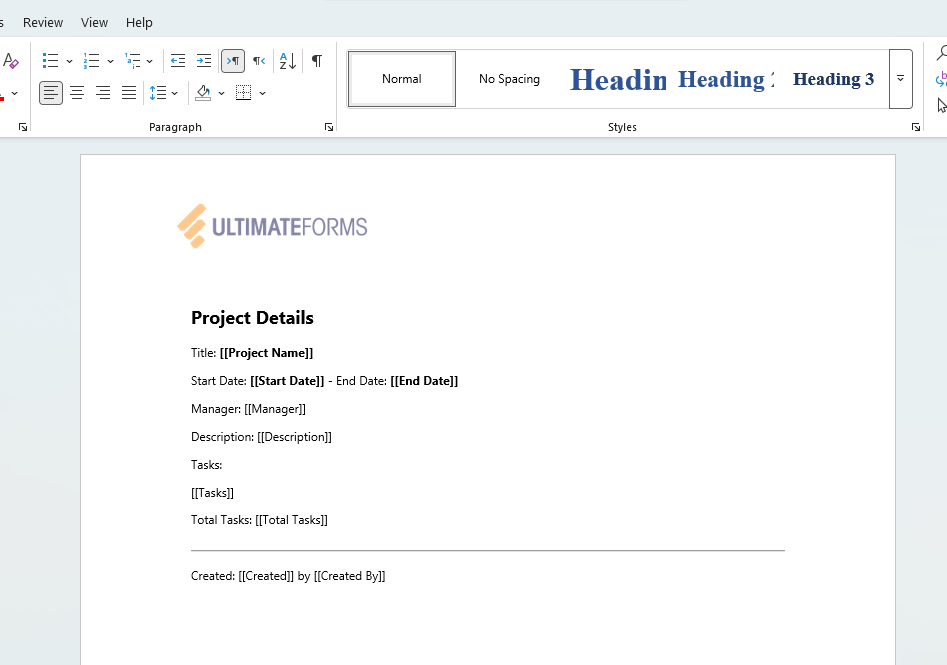
Upload the document in the Print settings, and it becomes the report's rendering layer. Each record fills the tokens with its own values. What you designed in Word is what every reader receives, record after record, forever. The complete Word generation walkthrough builds a template end to end.
Simple and advanced template modes exist alongside the Word path. The simple mode produces fast results with almost no setup. The advanced mode's rich text editor places content exactly where you want it. Most report builders start simple and move to Word when the branding starts to matter.
Reports that reach across records
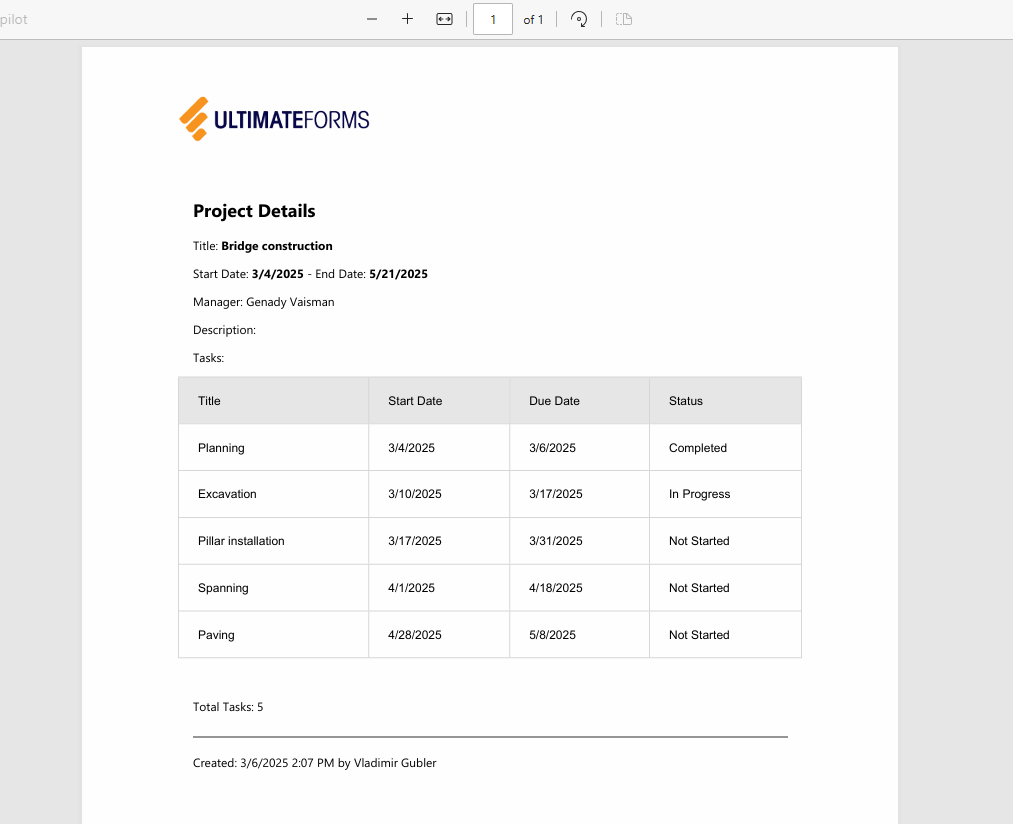
The difference between a form printout and a real report is usually the related data. A project report is not one item. It is the project and its tasks. An order summary is the order and its lines. An audit report is the audit and its findings.
The template system handles this directly. Related items render inside the parent's report as repeating sections, and parent and child records consolidate into one PDF. Filters inside the template control which related records each report includes, so the client's copy shows the deliverables and not the internal notes.
Lookup values and calculated columns merge in like any other data. The report always reflects the record as it is at the moment of generation. Nothing is copied, so nothing is stale.
One template, many readers
Templates are stored centrally in the Print settings, and that storage does quiet work for you.
A list can hold several templates. The one-page summary for the weekly meeting. The full report for the quarter. The external version for the client. The person printing picks the right one, or conditions select it automatically.
Templates are reusable and editable. When the logo changes or a section is added, you edit the template once, and every future report follows. Old reports already delivered stay as they were. Administrators see every template in one place, which keeps the report library governed instead of scattered.
And output format is chosen per delivery. PDF for anything final: client deliverables, compliance copies, archives. Word when the reader will edit further: the draft that gets a narrative added before it goes out. Excel exists for data-shaped output, covered in generating Excel documents.
The five reports most teams build first
Project status reports. Milestones, risks, budget, and next steps, generated from the project record and its task list. Leadership gets the same shape every week, and the project manager stops rebuilding it by hand.
HR documents. Onboarding checklists, performance reviews, and incident reports, all branded and consistent. The HR record is the source, so the document always matches the system.
Inspection and audit reports. The inspector completes the form in the field. The compliance team receives a polished PDF of the findings, and the audit trail covers what happened around it.
Sales quotes and proposals. The rep fills in the list. The customer receives a client-ready proposal. The pricing never suffers a copy-paste error, because there is no copy-paste.
Inventory and asset reports. Stock levels, equipment records, and item history, presented for internal review on demand.
The shape is the same in every case. The data lives in the list. The template holds the presentation. The report is the two meeting, on demand.
When the report should produce itself
Everything above describes reports generated by a person clicking Print. Many reports should not wait for that click.
The Monday status report, the month-end summary, and the overdue-items digest all recur on a calendar. An action generates them on schedule, renders the same template, and emails the result or files it into a library. The dedicated guide to that pattern is automated report generation.
The craft in this article transfers whole. The template you build for the button is the template the schedule uses. Design once, deliver both ways.
Two boundary notes complete the picture. When the output you need is just the view as a table, open tickets, this week's orders, list view printing needs no template at all. And when the report must carry approvals visibly, signatures print with the document, so the reviewed report looks reviewed.
Building your first report
Pick the report your team currently assembles by hand most often. There is always one, and it is usually the weekly status or the client summary.
Build its template in Word in an afternoon: branding, sections, tokens, one table. Upload it, generate from a real record, and compare it to last week's hand-built version. The template version will be more consistent, and it will have cost one click.
Then let the template earn its keep. The second week costs nothing. The schedule can take over the sending. And the next report template takes half the time, because the habits transfer. For everything else the Print component can produce, from calendars to merged packets, the complete guide maps the territory.
Frequently asked questions
Add your comment