Forms
Actions
Alerts
Associated Items
Connected Lookup
Print
Import
Signature
External Data Lookup
Calendar
Rollups
Charts
Counters
List Search
Filters
Item IDs
Color Choice
User Property
Document Link
Voting
Stay in the know
Get helpful videos
Add a filtering panel to any SharePoint page: 8 filter types, cascading lookups, and treeview navigation driving every connected web part. No code.

Ultimate Forms: Filters
adds a customizable filtering panel to any SharePoint page and connects it to the web parts around it. One panel hosts multiple filters across eight types, from free text and date pickers to cascading lookups, user pickers, and treeview navigation, and every connected list, library, or chart updates to match. Filters can also work invisibly, driven by URL parameters or the current item, so one page serves many audiences. Configured in the browser, no code.
A dashboard without filters is a poster. This is what makes it an instrument.
One page, many questions
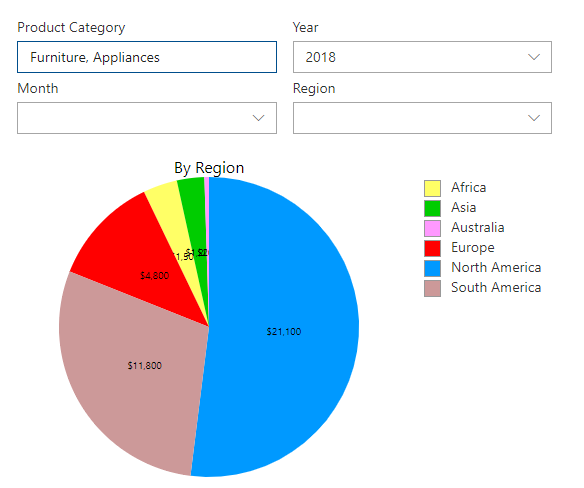
Every team asks the same data different questions: the manager wants her department, finance wants this quarter, the coordinator wants one project. Without page-level filtering, the answer is a dozen near-identical views and pages, each maintained separately, each slightly out of date. Classic SharePoint's filter web parts once helped, but the modern experience left that gap open.Filters closes it with a single panel: the audience picks their slice, and everything on the page, lists, libraries, charts, counters, and rollups, follows.
What Filters can do
Eight filter types, each true to its data
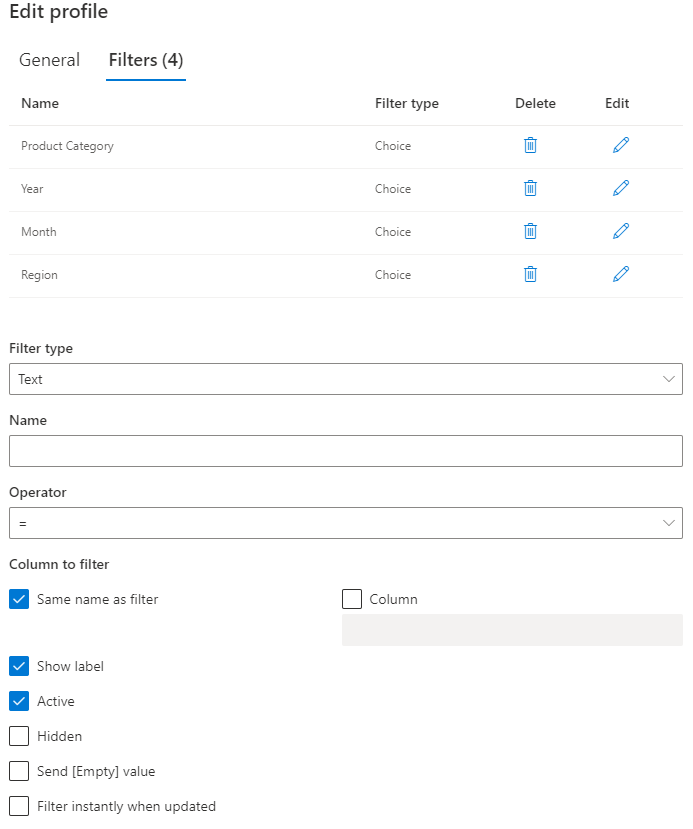
Free text for keywords. Number and currency with range validation. Date pickers. Choice with single or multiple selection. Lookup filters drawing values from lists anywhere in the site collection, with single or multiple selection. User and group pickers. Form filters reading URL or POST parameters. Current Item filters reading properties of the item the page belongs to. Users always get the right control for the question, and defaults can be set on any filter so pages open pre-focused.Cascade and navigate
Lookup filters chain into cascading relationships, so region narrows country and country narrows office, the Connected Lookup experience applied to whole pages. The treeview filter turns hierarchy into navigation: click a branch to filter everything to that location, and even create new items and documents directly into the selected branch, which makes a treeview-plus-library page behave like a structured filing system.Filter without showing a filter
Interactive filters are only half the story. Hidden filters apply conditions users never see, URL parameters pre-filter a page the moment it loads, and Current Item filters make a form or publishing page show exactly the related records that belong to it. Combined, they produce targeted pages from one build: send each department a link to the same dashboard and each sees only its own data.Fit the page, not fight it
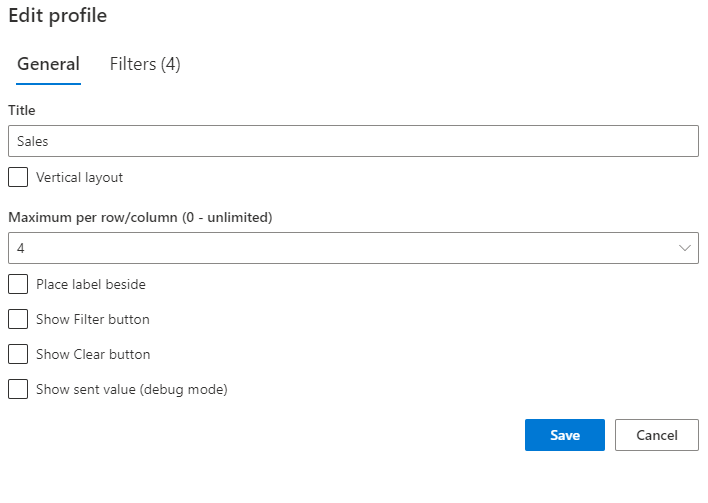
Host multiple filters in one web part, arrange them horizontally or vertically with automatic row and column breaks, and connect them to any connectable web part on the page. The panel is one more building block in the no-code dashboard stack, alongside charts, counters, and rollups.Compared with Native SharePoint
| Ultimate Forms | Native SharePoint | |
|---|---|---|
| Multiple filters within one web part | ✓ |
|
| 8 filter types | ✓ |
|
| Cascading filters | ✓ |
|
| Filter by treeview | ✓ |
|
| Create new items and document based on treeview location | ✓ |
|
| Localized into English, French, Spanish and German | ✓ |
✓
|
Where teams use it
A help desk page filtered by technician, status, and date on the Help Desk template. A PMO dashboard where the treeview walks program, project, and phase. A document center where the treeview doubles as the filing structure for new uploads. Department dashboards sent as pre-filtered links from one shared page. Where List Search finds the one item you need, Filters shapes the ongoing view you work in; most operational pages want both.Frequently asked questions
Q: Can one filter control multiple web parts on a SharePoint page?
A: Yes. The Filters panel connects to every connectable web part on the page, so one selection updates all connected lists, libraries, and charts at once.
Q: What filter types are available?
A: Eight: text, number with range validation, date, choice, lookup, user/group, form (URL or POST parameters), and Current Item, plus a treeview for hierarchical filtering.
Q: Can filters cascade, like country narrowing city?
A: Yes. Lookup filters support cascading relationships, with each selection narrowing the next filter's values.
Q: Can a page be pre-filtered from a link?
A: Yes. Form filters read URL parameters, so a shared link can open the page already filtered, and hidden filters can apply conditions users never see.
Q: Can I filter a page by the item it belongs to?
A: Yes. The Current Item filter reads properties of the current list item or publishing page, showing related records automatically.
Q: Can users create items in the location they have filtered to?
A: Yes. With the treeview filter, new items and documents can be created directly in the selected branch.
Screenshots